Showing posts with label science. Show all posts

Sunday, 4 December 2016


The Beijing lineage of M. tuberculosis is the villain in a movie sequel. Nastier, scarier, harder to kill. You thought tuberculosis (TB) was bad? Think again. The Beijing lineage is that little bit worse, associated with a speedier disease progression and increased antibiotic resistance.

I’ve always had a thing for studies that attempt to pick apart the origins of infectious diseases. So when I spotted a paper on the makings of the Beijing lineage, my excitement levels came close to when I discovered there’s going to be a Guardians of the Galaxy 2.

A while back, a paper came out suggesting that the Beijing branch of the TB family tree emerged some 30,000 years ago in Southeast Asia. Then, as the Han Chinese population embraced farming as a way of life, BOOM! The Beijing lineage exploded in northern China and started its journey towards worldwide misery.

Another study, however, put the approximate age of the lineage at around 6,600 years old. Suffice to say, attempts to date the M. tuberculosis family tree are notoriously unreliable. They all rely on some pretty big—and pretty shaky—assumptions, mainly based around how quickly the bacterium accumulates changes in its DNA.

So on to this new piece of research. It takes advantage of the increasing availability of whole-genome sequencing to look at how the pathogen has evolved in fine detail. The researchers were interested in a specific branch of the Beijing lineage—the central Asian clade, which recently reared its evil little head in Western Europe.

Like previous studies, I doubt that the molecular clock used in this study was calibrated accurately. But what’s clever about work like this is that it’s possible to superimpose expansions in the bacterial population size over big human upheavals. More bacterial diversity=worse living human living conditions. TB basically takes advantage of low points in human history. Anything that results in poor health, overcrowding, decaying healthcare systems, etc etc.

The study suggests that back in the 1950s to 1960s, the central Asian clade first appeared in the former Soviet Union. Then, thanks to the Soviet-Afghan war, it entered Afghanistan 1979-1989. Following the American invasion in 2001, the clade spread further as people were displaced from their homes and former lives. As Afghan refugees found their way to Europe, so did the central Asian clade of the Beijing lineage.

Back in the former Soviet republics, the clade had been similarly busy taking advantage of the fall of the Soviet Union. When it comes to historical events with huge ramifications for TB, the implosion of the Soviet Union is among the big ones. Bye bye, decent public healthcare and TB control; hello, drug resistant TB. Even today, multi-drug resistant TB is a gigantic issue in many ex-Soviet countries.

What studies such as this one demonstrate is how easily M. tuberculosis rides upon the back of political instability, war, population displacements and all the other crap us humans heap upon each other. And based on current events, none of that crap is going anywhere. So where does that leave TB?

Eldholm V, et al. (2016) Armed conflict and population displacement as drivers of the evolution and dispersal of Mycobacterium tuberculosis. PNAS 113(48):13881-13886.

Saturday, 26 November 2016


In Agra’s slums, community volunteers are visiting the houses one-by-one and asking the occupants a simple question: “Have you been coughing for more than two weeks?”

Of the ten million new cases of TB every year, one-third remain invisible to the public health authorities. India currently holds the dubious title of World’s TB Capital and accounts for one million of those missing patients. Many of those whose TB goes either undiagnosed or unreported are lost somewhere among the muddy streets and flapping fabrics of the poorest urban communities.

Much of India’s TB problem is socioeconomic—poor housing, poor sanitation, overcrowding, and unhealthy populations both at higher risk of developing active TB and with limited access to adequate healthcare. Active case finding among these marginalised and vulnerable populations is part of the solution to ensuring that people receive treatment and do not continue to transmit their infection to others.

A short paper published last week describes the lessons learnt from a pilot project looking for active TB cases among the half-a-million inhabitants of ‘Agra city’. Community volunteers were offered incentives to visit house-to-house and educate the inhabitants on TB, collect demographic details, and ask if anyone had been coughing.

Where the answer was ‘Yes’, potential TB patients were referred to a local health facility for further testing. What surprised me about the results of the study was that only 40% of those referred actually went of their own fruition. The other 60% had to be accompanied by the community volunteers, who returned to the homes of those not self-presenting within one week.

The study also revealed that levels of TB knowledge among the 3,940 households surveyed were actually very high. Ninety-percent of respondents had heard of TB; most of these people knew that coughing was a symptom. Yet the volunteers still managed to find 382 potential TB patients who hadn't sought out a diagnosis.

When questioned, most of the families said they relied on private healthcare providers for medical care. India’s private sector is highly variable, encompassing world-renown TB doctors all the way down to unqualified charlatans. The combination of patients not seeking out medical care and, when they do, turning to someone who won’t necessarily provide them with a correct diagnosis begins to explain why so many cases of TB go undetected.

It was beyond the paper’s scope to discuss why patients don’t seek out a TB diagnosis but, for me, this is one of the most important questions. What are the barriers that stop people living in Agra city—or in any other part of the world, for that matter—from approaching the health services with symptoms of TB?

Because new drugs, vaccines and diagnostics aren’t going to eradicate TB alone; not when millions still don’t receive the existing treatments and people continue to die from what is a curable disease.

Prasad et al. (2016) Lessons learnt from active tuberculosis case finding in an urban slum setting of Agra city, India. Indian J Tuberc. 63(3):119-202

Sunday, 20 November 2016


You know when you drive an unfamiliar car and you have to find your way round all these knobs and buttons to make the car go in the direction you want it to go in? M. tuberculosis has the same problem when it comes to the human immune system. This can make things tricky as it’s a pathogen that practices immune subversion rather than immune evasion—driving the immune response in its own favour rather than hiding.

A lot of the time, specific lineages of TB stick to the human genetic backgrounds that they’ve grown-up infecting. Even as global travel increases and the world gets smaller, these associations between TB lineage and their preferred flavour of human host persist. Over millennia, specific lineages of M. tuberculosis have evolved alongside specific human populations, learning all our secrets and finding ways to navigate our immune systems. Faced with an unfamiliar host, however, the pathogen can struggle.

But some lineages and sub-lineages are better at adapting to new host backgrounds than others. They’re the ‘generalists’ of the TB family. In comparison, the less-adaptable strains are known as ‘specialists’ and more or less stick to geographically restricted populations. They’re the ones who, if they ever go on holiday, demand a hire car exactly like the one they have at home. ‘I can’t be dealing with these fancy Japanese cars’, they say. ‘Give me a nice, British-made Rover.’

This idea of co-evolution and adaption is one I talk about in more detail in my book Catching Breath - The Making and Unmaking of Tuberculosis. The book is basically a scientific biography of TB exploring how M. tuberculosis came to be the world’s biggest infectious disease killer and how science is going to kill it right back. It comes out next summer as part of the Bloomsbury Sigma imprint of popular science books.

Here, though, I wanted to mention a new paper that came out last week from Sebastian Gagneux’s lab in Switzerland. In it, he looks at the success of M. tuberculosis lineage 4. It’s the most adaptable lineage, making its home on every inhabited continent—a generalist lineage that’s found its success thanks to both biological and social phenomena, according to Sebastian’s study. 

The team used SNP-typing and targeted whole genome sequencing to look at the genetic differences between 3,366 lineage 4 strains isolated from 100 different countries. They used the differences to break down lineage 4 into several sub-lineages. Some were generalists found in multiple locations; others, in comparison, were more isolated and rarely strayed outside of small regions of Africa, for example.

Like I said, M. tuberculosis doesn’t hide from the immune system. It wants to be recognised so the bits of the pathogen on the immune system’s watch list don’t tend to vary much at all. But Sebastian’s study showed that the generalists are more immunologically versatile than their specialist counterparts. This is likely because they have evolved to deal with a wider range of host genetic backgrounds and have had to come up with ways to ensure they get their own way no matter who they infect.

The paper was also interested in the sub-lineage known as L4.1/LAM. L4.1/LAM, like Starbucks, is on a mission to take over the entire world. It’s found everywhere from Africa to Australia. The scientists used the genetic differences between members of L4.1/LAM to predict its geographical origin. According to the results, it first emerged in Europe then, as us troublesome Europeans spread around the world, we took our TB with us.

It’s a common story when it comes to TB. The disease is among the world’s oldest and its history is twisted up with that of us humans. The spread of TB around the world tracks with human migrations; explosions in M. tuberculosis populations overlay with human upheavals. Understanding the co-evolution of M. tuberculosis and the human immune system has consequences for, in particular, vaccine design. How do we vaccinate against a pathogen that uses the immune response for its own benefit and how do we make sure any vaccine works in every population where not only the predominant lineage differs but so does the host’s genetic makeup?

Stucki D et al. 2016. Mycobacterium tuberculosis lineage 4 comprises globally distributed and geographically restricted sub-lineages. Nature Genetics.

Yu Y et al. 2015. RASP (Reconstruct Ancestral State in Phylogenies): a tool for historical biogeography. Molecular Phylogenetics and Evolution. 87: 46-49

Sunday, 26 July 2015

One week old baby

The other day I commented to the father of my child that having a baby is a little bit like going to prison. Not the ‘nice’ sort of prison where they let you do Open University courses and try to make you a better person. A Victorian-style prison where the inmates are forced to turn a crank thousands of times a day or walk on a treadmill for hours and hours with no end product to show for their labours. You do your time and then you’re released into a world you no longer recognise, having lost half your hair and a year of your life.

You know, writing that makes me realise why my partner looked at me with his ‘What the fuck?’ face. Yes, yes, I have a one year old miniature human to show for all those hours spent pacing to and fro sob-singing Somewhere over the Rainbow while the baby screamed because she was so flipping tired that she just couldn’t sleep. And, yes, all that panic-Googling because said baby has a highly disturbing habit of rolling her eyes over white when it’s windy wasn’t entirely wasted. I now know more about neurological disorders in infants than the average neurologist.

But I can’t say the first year of my baby’s life has lived up to my expectations of motherhood. Don’t get me wrong—it’s been totally worth it. My child really is the best baby in the world, even taking into account that month-long phase where she got so fat that all our baby photos look like we’ve dressed a small pig in human clothes. Or that way she hisses and bares her teeth whenever there’s a bright light nearby, like some blood-sucking vampire grub. Or the time she gave me Hand, Foot and Mouth disease that adults totally aren’t meant to get, which I totally did get, and am in fact currently typing with a fingernail that is totally going to fall off any day now, and urggggghhh.

I know what you’re thinking: if this is Kathryn’s first foray into Mummy-blogging then, Dear God, nooooo. You’re alright, don’t worry. I am fully aware that, while I’ve somehow managed to find myself in possession of a predominantly happy and healthy toddler, it has not been thanks to any previously dormant Mother-skills that need to be unleashed upon the world. I barely know what I am doing when it comes to my own child, so I am most definitely not in any position to offer parenting advice to others.

What I do want to talk about is how wasted time isn’t always wasted time. I worked in scientific research for, what, 8 years as a post-doc and for 12 years total if you count the time spent working towards my PhD. And of all the work I did during that time, maybe 5% amounted to something useful. Maybe less, depending on your feelings towards basic tuberculosis microbiology. All those hours in the lab, all that funders' money. You can’t be scared of failure if you want to be a scientist. 

I’ve read papers before where years of work have been condensed down into a few lines. The protein could not be crystallised. A gene deletion mutant showed no phenotype. Compounds showed poor activity in vivo. No one gets into science to spend their days performing the grunt work that provides the filler for the rare discovery that changes the status quo. But the reality of working in the lab is that taking the easy road rarely leads to the really interesting results, but taking a risk—trying something completely new—will often lead absolutely nowhere.

Now that I’ve left the lab and am embarking on a new adventure in the form of writing a popular science book, I am getting to see science from a new perspective. It’s dizzying to see how much research there is out there that no one outside the field ever hears about. Work that’s published in the best journals can still be just another drop in the ocean. Years, sometimes decades, of work. Even the biggest discoveries can sometimes look very boring from the outside. It’s enough to make my own work feel very small and insignificant.

But somehow, while you’re hunched over the lab bench, it doesn’t feel like you’re wasting your time. Two weeks struggling to make a protein expression vector. Two months purifying a protein so that you can get started on the real experiments. Two years screening inhibitors only to conclude that the protein you picked at the start wasn’t the best drug target after all. Go back to the beginning and try again. From the outside, it looks like wasted effort but, along the way, there were small successes. New techniques that will improve future attempts. Students trained who will go on to do their own research. Interesting side projects that may or may not lead to something exciting.

I’d rather hoped that the lessons science taught me about the value of failure might translate into a bottomless well of patience when it came to stay-at-home-parenting. Hypothesis rejected! One of the issues is that reproducibility goes out the window when it comes to babies and there’s an inverse relationship between how much research you do and how good the outcome is. But, like my scientific career, I sometimes look back on the first year of my baby’s life and wonder where all the time went. What have I achieved? Could I have done more?

Now that I’m coming out the other side of the baby period and starting to piece back together my own life and ambitions, I can see why so many women find it so difficult to juggle motherhood and a career. Pre-baby, it seemed so simple. I couldn’t understand why some women seemed to cease to exist as an individual once they had kids. Now? I can’t decide whether those failures in the lab would feel like time that could have been better wasted at home with my daughter, or vice versa.

So instead of returning to work for someone else, I am going to attempt to carve out a freelance writing career that will let me work on something I want to work on while also being around to clean spaghetti off the walls. No doubt there will be plenty of failures along the way and I am sure there will be times where I regret wasting my time on something that leads nowhere. But, hopefully, in a year’s time when I look back, it will have all have been worth it.

Sunday, 22 February 2015

In a small chapel just outside Prague, a chandelier made from every bone in the human body hangs from a garland of skulls like the world's creepiest wind-chime. Nearby, a coat of arms features an almost comical bone bird—its wings a human hand and its neck a gnarled vertebrae—that pecks at a skull's eye socket. In each corner of the room, several thousand, maybe more, bones are tightly packed into huge bell shaped mounds.

Back in 1278, the abbot of the Sedlec monastery sprinkled some earth from Jesus' supposed burial site onto the abbey graveyard. The effect was much like the opening of a new crossrail station in a previously affordable London borough. One moment, fashionable types wouldn't be seen dead there; the next there's a trendy pub opening up with artfully stained sofas and an influx of skinny jeans. Or, in the case of the Sedlec graveyard, corpses. Suddenly, it was the place to go and die, much like Southwold only without the beach.

By the 16th century, the Black Death, or plague, had deposited so many bodies in Sedlec that there was literally no more room. So a partially-sighted monk was tasked with digging up all the bones crammed into the graveyard and stacking them up in neat little piles. The remains of 40,000 people eventually found their way into the ossuary (I like to imagine that each and everyone was moved by that one dedicated monk). Later, during the 19th century, a local family employed a wood carver to make the bones pretty. Clearly this wood carver was a distant relation of Tim Burton, and his creations were eerie and strange, and surprisingly beautiful.

Is that shameful to admit? The Black Death, after all, has to be one of history's most terrible killers, decimating huge swaths of the population over the centuries. Shouldn't the remains of all those dead invoke feelings of solemnity and sadness, not awe?

This is an issue which, as a scientist working on a killer disease, I've often wondered about. Can an infectious agent that kills millions ever be beautiful and the subject of admiration and respect, or should I have felt horror and disgust with every swirl of the culture flask, every squirt of my pipette? After all, there were days when confessing my profession to a stranger left me feeling a little like I’d just admitted to marrying a serial killer in a prison chapel.

I worked on a different type of plague to the Black Death—the White Plague, or tuberculosis. Even today, tuberculosis kills almost two million people every year. Despite this, I’ve always held a strange affection for the bacterium. There's something amazing about peering into the minuscule world of the viruses and bacteria and, like an astronomer looking out into space, feeling wonder at the complexity and elegance present in each and every tiny species.


Recently, an artist called Luke Jerram created blown glass sculptures of various killer viruses and bacteria. He didn’t make one of the Black Death bacterium, Yersinia pestis, but he did create an Ebola, Smallpox, and HIV, among others. While many people marvelled at the beauty of his art, more than one person raised the question of whether it was distasteful to admire diseases responsible for untold misery.

Perhaps a better way of looking at it is that it is the science that is beautiful. Once, we believed that the Black Death was a judgement from God or a curse from the odd lady down the road with tangled hair who talks to cats (don't we all?). Now, we can look this tiny killer in the pilli and see it for what it is—an amazing creation of nature that walks the fine line between horror and beauty. The more we understand, the less there is to fear.

When I look at the Sedlec Ossuary, I see the humanity in the careful way that the bones have been arranged, and am reminded of how fragile and fleeting life can be. I see a memorial to all the lives claimed by diseases such as the Black Death and I remember how far we’ve come since the days when the plague killed between 30 and 60% of the European population. The bones aren't beautiful because they are dead but because, once, they were alive.

Monday, 2 September 2013


Let’s imagine for a moment that uncertain job prospects and too much caffeine pushes me over the edge and I gather up every monkey in the world and shut them in a room with a bunch of computers. Sometime later, I return to a lot of flung poo and, among all the random strings of letters typed by the unfortunate (and now cannibalistic) monkeys, I discover that one capuchin has typed the sentence: “HELLO KAT”.

This is a version of the Infinite Monkey Theorem, which basically states that a monkey hammering on a keyboard for an infinite amount of time will eventually type out the complete works of William Shakespeare. It’s all about probabilities.

Give a million monkeys ten years, and the probability that one of them will type ‘HELLO KAT’ entirely by chance is 1 in 2. The same as guessing the outcome of a coin toss*. Throw in all the other 9 character sentences that can be made from the letters on a keyboard, and the likelihood of one of the monkeys NOT typing something meaningful by chance is practically zero.

But what happens if I now take that one, single monkey, and I publish a paper saying that I have found the world’s first literate capuchin? Disregarding all the random sentences typed by all the other monkeys, I proclaim that there was only a 1 in 1.8x10⁷ chance that my monkey could have randomly typed ‘HELLO KAT’. Those odds are so slim that surely this particular monkey must have intentionally hit those particular keys?

This is an example of Survivorship Bias, in which only focussing on the successes while ignoring the failures can lead you to make incorrect conclusions.

The same thing happens when it comes to careers. I can’t count the number of times I’ve listened to a leading scientist explain how they made it to the top using their formula of:

(Being smart) x (Choosing the right field) (Hard Work) + (Networking) = Success

The thing is, this doesn’t take into account all the people who are plugging the exact same numbers into the exact same formula and coming up with entirely different results. When something is heavily dependent on chance and luck, you can’t make conclusions based only on the survivors—you need to check the graveyard too. The road to permanent scientific positions is littered with the tombstones of postdocs who have fallen along the way and I can’t believe I didn’t notice them until the point at which I was down on my hands and knees, scrabbling around in the dirt.

The stupid thing is that others did try to warn me when I started out, but I didn’t want to listen. Looking back, I wish I hadn’t been so quick to disregard the experiences of older scientists finding themselves in the same position I am now in. It was all too easy to presume that they’d done something wrong; that they hadn’t tried hard enough or they simply weren’t very good at science. Understanding the role that luck plays in a scientific career wouldn’t have stopped me from becoming a scientist, but it might have made me less of a dick.

Now that I am picking myself back up and heading off for pastures new, I am experiencing yet another example of Survivorship Bias. People who know that I write science fiction novels in my spare time keep sending me articles about self-publishing success stories. Why are you trying to find a traditional publisher when E. L. James self-published 50 Shades of Grey and look at her now! What they don’t realise is that, for every wannabe author who becomes famous from self-publishing, there are hundreds of thousands who fail miserably.

When it is a scientist who tries to tell me how to be successful as a writer, I ask them if they would self-publish a scientific paper that had been rejected by a few dozen journals. It’s not the same, they say, science isn’t subjective like writing. You either do it right or wrong. Then I sit back and wait for them to do everything right and find that it still isn’t quite enough.


*Let’s just say there are 50 keys on my keyboard. So the probability of that monkey hitting the first ‘H’ is 1/50. The probability that the ‘H’ will be followed with ‘E’ is (1/50) X (1/50) and so on. I worked it out, and the overall probability is 1 in 1.9x10¹⁵, which in the grand scheme of things is extremely close to zero. But let’s say that a monkey can type at a speed of 200 characters a minute and it manages to type around 100 million strings of 9 characters over one year. If we work out the probability that the monkey will type ‘HELLO KAT’ at some point over the year, it works out at 1 in 1.8x10⁷ – still very, very unlikely. But what if we give a million monkeys ten years? Now the probability that one will type ‘HELLO KAT’ entirely by chance is up to 1 in 2.3. Entirely doable.

Tuesday, 20 August 2013


Science embodied as a person would be a rubbish date. You’d be so dazzled by Science's awesome that you’d not only end up paying for dinner, but you’d find yourself promising them your undying loyalty. Then, before you know it, you're feeling guilty for not spending all of your time with Science and Ohhh that Kool-Aid looks really tasty*.

Misplaced loyalty to a career undoubtedly isn’t unique to scientists, but it does sometimes seem to be worryingly common in my profession. How many non-science people do you know who’d continue to work when they’re no longer being paid? Not many, yet it is all too common for end-of-PhD students and sometimes even postdocs who need to do that last experiment for the paper. And don’t get me started on the long hours and weekend work that seem to be the norm in most research laboratories.

We tell ourselves that we’re doing it for our own benefit—because we love what we do and want to give ourselves an edge in a very competitive environment. But lab heads and universities happily take advantage of this devotion to our careers and there comes a point where they are benefiting far more than the temporary scientisit. Like the vampires inexplicably romanticised by young adult fiction, of course employers aren't going to say no to willing victims eager to be sucked dry of their intellectual creativity*. But maybe they should.

Sure, less PhDs would get funded because it would cost a hell of a lot to keep paying every student until the moment they submit their thesis. Some papers wouldn’t get finished if universities couldn’t find extra money to keep on postdocs at the end of a grant. And the scientists would be the first ones to complain and defend their right to be exploited. 

With four months left in the lab, I’m not sure what scares me more—coming to the end of my contract and not having a new career to move on to, or finding a new position with time to spare and having to leave my project unfinished. Come December 31st, neither my current boss nor my research career is going to be buying my New Year’s Eve beers, so why do I feel like I would be letting both down if I don’t stick it out until the very last chime of Big Ben?

I’m sure that there are few lab heads out there who, if offered the professorship of their dreams, would turn it down out of loyalty to their postdocs and PhD students. So why do some temporary staff like me feel so guilty at the prospect of jeopardising a lab’s future grants and papers by making a selfish decision that would be in our best interest? It's like I have to keep reminding myself that my contract with the university is for a three year postdoc and not my soul. 

My relationship with Science has reached the point where I’m sat comfortably on the sofa in jogging bottoms, with barbeque sauce smeared around my face. Science is out there being all sciencey and cool, and here I am, clinging on to the memories of all our happy times together*. I keep telling myself that loyalty is only worth as much as the rewards it yields, that I could be so much happier in a new relationship, but it is so hard to not feel guilty about leaving. 

*I blame impending unemployment for all this melodrama. If any potential employers are reading this, I really am entirely sane. Please give me a job. 

Thursday, 1 August 2013

They can't really break your arm with their wings

On leaving laboratory science and why it’s going to be awesome (but first a rant)

A few years ago, I went on this residential course for postdocs whose years’ experience was greater than their output of Nature/Science/Cell papers. We made paper bridges for hamsters and drew our innermost feelings on giant shields for a reason I can’t quite fathom. Later, when we’d all got to know each other through the medium of unrelenting pessimism and beer, we went around the room and stuck post-it note ideas for alternative careers on everyone else’s shields.

My alternative career suggestions? Science fiction novelist, science journalist, or primary school art teacher.

Today, with five months left of my contract and the decision made that it is time to move on to a new career, I find myself looking back on those suggestions and thinking how absolutely, ridiculously naïve they were. We all know that there are more postdocs than there are permanent research jobs, and that most of us will have to pack up our ‘transferrable skills’ in a little knotted handkerchief and venture out into the big wide world. But this enthusiastic ‘You can do anything you want with a PhD!’-mentality doesn’t help anyone. It’s right up there with patting a five-year-old on the head and telling her that of course she can grow up to be an astronaut if she Just Dreams Big Enough.

It’s the science journalist suggestion that bugs me the most because I hear this from students. All. The. Time.

“What are you going to do after your PhD?”
“Oh, you know, I’ll probably just go into science journalism.”

No experience, no training, no particular interest in science communication. But, for some reason, there seems to be a prevailing attitude among a worrying proportion of scientists that having Dr in front of our name somehow qualifies us to hop out of the lab and easily pinch someone else’s hard-won career. It might be our plan B, but it will do. And I worry that it makes the rest of us look like dicks by association.

This is my big problem with PhD training.

Universities are churning out all these slightly entitled 25-year-olds with no idea of how the real world works. Students are paying more and more for their undergraduate courses, and the teaching is becoming increasingly structured with teaching fellows taking the lectures instead of researchers. To me, it feels a bit like we’re spoon-feeding people who should be able to learn independently by this point in their life. Then some start a PhD and a small minority never pause to consider that maybe they should stop thinking of themselves as a student and start acting like an adult.

No one really fails a PhD—I've seen far too many poor students saunter through their vivas with no problems after spending 3 or 4 years treating their PhD like a hobby rather than a professional job. And this devalues the PhD for everyone else. With so many of us wanting to use our skills in other careers, I'd kind of like it to represent the pinnacle of scientific education and not become an esoteric qualification unworthy of respect.

It's hard enough for the best and the brightest scientists to secure fellowships or lectureships, so why are we letting people continue wasting their time and money on a pointless PhD that won't help them become a scientist and hasn't taught them anything they couldn't have learnt better in the workplace?

There is no grading for a PhD but maybe there should be. Or maybe the standards just need to be higher and more consistent. Would I have passed if this was the case, or even got a project in the first place? I like to think I'd have risen to the challenge but we will never know. 

But what does this bitter little rant have to do with me leaving science?

At the end of the day, it’s not the poor job prospects and uncertainty that got me (although that didn't help). No, it’s being part of a system that spews out more and more PhDs despite knowing that there just aren’t enough jobs, then tells us that we can do anything we want with our little qualification and starts again with the next batch of naive wannabe scientists. Throw enough people at Science and a few will stick. Everyone else? Transferable skills!

It lets everyone down—the students who don’t have a clue and the postdocs who become demoralised at the thankless task of mothering adults who don't know why they’re doing a PhD in the first place. Science and scientists are complicit in a system that screws over postdocs in more than one way and it's shit.

So I'm going to take all my 'transferable skills' and find a job that makes me happy instead of frustrated; challenged instead of used; that respects me for the things I am good at instead of treating me like a disposable scientific thinker, broken equipment tinkerer and exhausted nursemaid.

I’ve always felt like leaving science and starting something new would feel like I’d failed. And I guess this is part of the reason why I’m jumping before I am pushed. But, now that I’ve told my boss that this postdoc is it for me, I feel inexplicably happy. I have no idea what I will be doing after Christmas, and it’s going to be awesome finding out.


Tuesday, 4 June 2013

Is there a formula for scientific success, or do some scientists simply ‘get lucky’?

When in doubt, draw a graph. This is not so much useful advice as a way of life. The pros and cons of various DNA ladders? The best flavour of soup for ten minute incubation breaks? Or the relationship between things breaking and student proximity? Questions all vastly simplified through the liberal application of pie-charts, bar graphs or, in times of great need, 3D scatter plots. In my experience, there are only two things that can't be better explained in a graphical format: cats and scientific careers.

Surely there should be a positive correlation between the amount of effort a scientist puts into their career and the likelihood of scientific success? But, no, instead of a nice straight line with an R2 value of 0.99, I keep getting something that looks like the teeth of a career-eating monster. "Aha," says Reviewer 3, "the author has failed to take an important variable into account: creativity." And, for once, he/she does have a good point. Is there any scientist out there who hasn't entertained the scary possibility that their lack of seventeen Nature papers might just be due to a lack of scientific ability?


But natural talent isn’t enough, and neither is hard work. I still can't get the numbers to add up. There's something else at work here: luck.

An extreme-graphing habit doesn't exactly leave much room for futile emotions such as jealousy. But, when it comes to scientists who seem to get all the lucky breaks, I can't seem to help but daydream about all the terrible accidents that might befall them. Contaminated cultures, ripped protein gels, background on their western blots. I know, I'm an awful person.

Yet luck is something that anyone embarking on a career in the lab needs to consider. With only 5% of early career postdocs progressing to the next level – a fellowship or lectureship – there is the very real possibility that many good scientists are going to find themselves chucked out of the lab along with the out-of-date plasmid extraction kits. Actually, that's not true – no one would throw away perfectly useable consumables just because they are past their use-by date.

Choose a slow-paced lab in which to pursue a PhD, or the wrong project in some cobwebby corner of science into which even your supervisor doesn't want to venture, and your career is already off to a shaky start. In today's competitive scientific environment, no one can afford to treat a PhD as a learning experience during which they can gradually learn how to be a fully-fledged scientist. Yet no one seems to tell you this when you're getting to grips with your pipette.

With the big grants increasingly going to big established labs, the chances of making a real impact during your PhD can depend on being in the right lab at the right time. Pick a mentor who will champion you through fellowship and lectureship applications, and you have the chance to sink or swim on merit alone. And these are the lucky guys and gals that test my composure more than temperamental cell lines. I don’t doubt that they’re brilliant, but it sometimes feels like they've had all the opportunities.

But maybe it's just that they've taken advantage of their fortuitous circumstances, and managed to get themselves in a position where luck is on their side?

We are always hearing how so many of the big scientific discoveries are down to luck. Alexander Fleming discovered penicillin when one of his bacterial Petri dishes became contaminated with antibiotic-producing mould, right? Only, what no one seems to mention is that it was Fleming's scientific curiosity (and stubbornness) that got penicillin through the ten long years it took to find a way to turn it into a drug. That wasn't luck that was, um, science.

Much of the work we do as scientists is preparing ourselves so that, when those moments of serendipity strike, we are ready for them. Perhaps the same goes for careers and the 'lucky' guys aren't lucky at all.

Tuesday, 26 March 2013


If you see a baby seat left by the side of the road, DO NOT STOP!!! Local police have released a warning that criminal gangs are using this ruse to lure women into stopping their cars to check on the baby. The location of the car seat will usually be beside a wooded area, and the woman will be dragged out of view of the road, beaten, raped, and left for dead. Their car and possessions will be taken by the thieves! These are desperate times and unsavoury individuals will take desperate measures to get what they want. Please inform all the women you care about!!! This nearly happened to my friend's wife but, luckily, she didn't stop.

And then their kidneys get stolen and then...oh, wait. Setting aside the point that any criminal gang attempting to make a living in a rural English village possibly isn't intelligent enough to come up with such a complicated scheme, surely something so horrific would have been, like, in the news?

What this is, dear gullible Facebook and email acquaintances, is an urban legend. Stories such as these, like 19th-century folk-tales, seem to mirror the anxieties and beliefs of the people who tell them. Little Red Riding Hood? The story takes on a new meaning when you remember that, once upon a time, girls really might just have been eaten/molested by wolves/men if they strayed into the forest away from the safety of the village.

The baby seat tale isn't much different from Little Red Riding Hood, especially if you believe the interpretations of the original folk tale as being a warning against the dangers of sexual predators. Innocent victim lured away by criminals, leaving her entirely at their mercy to suffer what is commonly perpetuated as the worst fate that can befall a woman - rape.

As a woman, I've had this rapey fear drummed into me from an early age, via cautionary tales of foolish girls wearing short skirts (urghhh) and warnings about the dangers of shady men prowling the nighttime streets. Never mind that most rapes are perpetrated by someone known to the victim; never mind that this kind of myth can be harmful when it plants the seed in people's minds that rape isn't really rape unless it is committed by a violent stranger.

We can see a similar collective hysteria when it comes to paedophillia and recidivism - that's the likelihood that a criminal will reoffend. Studies have suggested that sex offenders are actually less likely to be rearrested after their release from prison than other criminals. But the widespread belief that re-offence among paedophiles is pretty much guaranteed has worked its way into how such criminals are sentenced (I'm not getting into the argument over punishment versus rehabilitation here, only that misconceptions shouldn't play a part in our justice system).

And are we still talking about the dangers of vaccination? A quick look in the news tells me yes! After all, what is a wealth of scientific information in the face of an internet-sized storm of relatable stories about kids whose lives have been ruined by vaccines? The irony is that, along with saving millions of lives, vaccines also immunised the public against their fear of vaccine-preventable diseases. No one is scared of measles anymore. But what about that girl who so-and-so's friend's aunt knew who was eaten by the family cats RIGHT after getting the MMR vaccine. Coincidence? Complete fabrication? Whatever, it's a good story!

Urban legends are a way of sharing and reaffirming our collective beliefs about the dangers surrounding us. Humans are hard-wired to want to tell stories and doing so creates a sense of community that brings us together and shapes how we live our lives. But it's not always a good thing when it makes us scared of things that aren't actually dangerous (vaccines, rural rape-gangs, Muslims), while at the same time we end up underestimating the real dangers (roads, alcohol, measles).

Some links:

Friday, 1 February 2013

In their words, "Guru Magazine is an exclusively crowd-sourced, free science-themed magazine. Released bi-monthly, it’s designed to be read and understood by regular people (like you and I). This means, like Wikipedia, it is shaped by its readers and dependent upon its contributors."

Issue 10 is out today and is full of great stuff, such as "Five reasons not to prepare for a zombie apocalypse" plus tips on how be a hit on Valentines day with all the right dance moves. Hmmm, dancing tips from scientists...


Oh, and I have an article in which I manage to quote both Lewis Carroll and Francis Crick.

Saturday, 19 January 2013


Faecal transplants are highly effective in treating recurrent Clostridium difficile infections compared to conventional antibiotics. The transplants proved so successful that the trial was stopped early to give other patients the chance to benefit from this slightly icky-sounding treatment, which is proposed to repopulate the gut with good bacteria to suppress the growth of Clostridium difficile. The results were published in the New England Journal of Medicine this week.

***
 
Oh, what's that? You're confused about the dramatic change from those word-things to the above explosion of anthropomorphised microbes? So I am trying something new - cartoon-based explanations of new scientific papers (Sci-toons?). I figured there are already many, many people writing about science on the internet, but how many illustrate their articles with vaguely menacing pictures of bacteria? Not many (although maybe there's a reason for this)!

Saturday, 14 April 2012

African sleeping sickness is one of those scary diseases that seems kind of alien to anyone living in the Western world but which is a real threat to those living in sub-Sahara Africa, causing around 50,000 cases each year. The disease gets its name from the most recognisable symptom—a disruption of sleeping patterns after the parasite infects the brain. A recent paper published in PLoS One shed some light on how the parasite makes the treacherous journey from the blood to the brain. But why does a parasite spread by infected blood want to get into our head to start with?
The three forms of trypansomes - slender, intermediate and stumpy.
Any infectious agent needs to have a plan of attack for dealing with the host’s immune system. Some microorganisms go along the route of actively switching off the immune response. Others hide from the immune cells that would otherwise kill them. The trypanosomes responsible for sleeping sickness use a less subtle but highly effective method to stay one step ahead of the immune system while circulating in the blood. The parasites are coated with ten million copies of the same protein which is recognised by the host, allowing the immune system to start clearing the infection. But, just as the host starts to get the upper hand, the parasite subtly changes this protein disguise so that they are no longer recognised by the immune system.


Without drugs, it is impossible for an infected person to deal with the infection and the disease is always fatal. But sleeping sickness has a fairly high rate of relapse even after treatment. One of the reasons for this could be that, at some point the parasite decides to make the trip from the blood and into the brain. Here, it is effectively protected from drug treatment, and can pass back into the blood system to continue the infection. An evolutionary explanation for this could be that some hosts are better at dealing with the infection than humans, and the brain represents a hiding place from the immune system.

Tsetse fly. Yuk.
Image from Wikipedia
This late stage of the disease—the brain stage—is not well understood. It takes weeks and months for the late symptoms including confusion, reduced coordination, daytime sleepiness, and insomnia at nigh to emerge, and the reasons for this remain elusive. One of the most interesting of these symptoms—the change in sleeping patterns—has an interesting explanation. Sleeping sickness is spread by the tsetse fly. The tsetse fly is one of the less pleasant creatures in the world and it has fairly disgusting table manners. It bites a hole in the skin, vomits up some of its last meal complete with any parasites along with agents to prevent the blood from clotting, and then feasts on the resulting blood pool. This isn’t particularly pleasant for the unfortunate owner of the blood. Therefore it helps if the meal happens to be asleep at the time of being fed on.  

But how does the trypanosome succeed in altering a person’s sleeping patterns? It appears that this is a side effect of a signalling molecule used by trypanosomes to control cell density. When the parasite gets into the brain, it doesn’t want to cause extensive inflammation and get itself noticed. So it secretes a messaging molecule called PGD2 that tells neighbouring parasites to commit parasite-suicide for the good of the overall population. But PGD2 has also been shown to cause non-REM sleep when injected into the nervous system. So secreting PGD2 directly into the brain is useful to the parasite when a person is far more likely to be bitten by the tsetse fly if they fall asleep during the day.


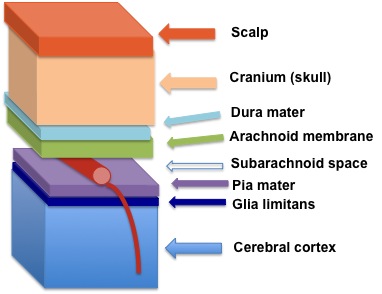
The sleeping sickness parasite makes
its way to reside between the Pia mater
 and Glia limitans at the edge of the blood.
Image from: Wikipedia
So how does the parasite get into the brain in the first place? Our brains are cut off from our blood supply by the blood brain barrier—a barrier which actively prevents such things as parasites from making the trip out of our veins and into our central nervous system. In addition to the blood brain barrier, we also have a barrier between our blood and the colourless liquid in which our brains float, and it is across this barrier that the parasites make the journey into the brain. Hartwig Wolburg and coworkers demonstrated that this journey takes the parasite through hostile territory until it reaches it’s a position at the edge of the brain where it is protected from the immune system but can still reinvade the blood if it so chooses.

But the group responsible for this work also addressed the question of why the brain stage takes so long to emerge. Something interesting about their attempts to reproduce the brain infection in rats was that it proved impossible to simply inject parasites into the nervous system. Instead, the infection needed to take its usual course, beginning with the blood stage and progressed to the brain stage after some time. It appears that there are three forms of the parasite (shown in the figure at the top of the post)—a stumpy form which does not undergo the variation in its coat proteins and is killed by the immune system, an intermediate form which is responsible for the blood infection, and a slender form which can cross into the brain. How this slender form emerges and whether it really is required for brain infection remains to be determined, however.

Research such as this has the potential to help the development of future vaccines and drugs by teaching us more about how the infection progresses. The current treatment for the later brain stage of the disease involves an arsenic-derivative which kills one in twenty people and has been described as ‘fire in the veins’ by those unlucky enough to need to take it. Over the past few years, sleeping sickness has slowly been decreasing in numbers and it is hoped that in a decade this disease may finally be eliminated.

Sunday, 26 February 2012


Yersinia pestis holds the dubious title of the world's most devastating bacterial pathogen. While its glory days of the Black Death are thankfully a thing of the past, this pathogen remains a threat to human health to this day. A recent paper published in PNAS describes how the bacterium switches off the immune system in the lungs, going some way to explain why the pneumonic form of the Black Death is almost always fatal if untreated.

During the Middle Ages, the plague, or Black Death—so called because of the blackening of its victims' skin and blood—killed approximately a hundred million people across the world. In Europe, in particular, between thirty and sixty-percent of the population is believed to have perished. Although we now know that the bacterium responsible was transmitted by rat fleas, Europe in the Middle Ages was not known for having a sound grasp of science. Theories to explain the cause of the Black Death included a punishment from God, alignment of the planets, deliberate poisoning by other religions, or ‘bad air'. This final theory persisted for some time leading seventeenth-century doctors to don a bird-like mask filled with strong-smelling substances, such as herbs, vinegar or dried flowers, to keep away bad smells and, therefore, the plague.

While today we can cure the plague with antibiotics, historical treatments were as unreliable as the Middle Age's understanding of the disease. The characteristic swellings of a victim's lymph nodes were often treated by blood-letting and the application of butter, onion and garlic poultices. But such remedies did little to improve a victim's chances (even if it did make them smell delicious)—mortality rates varied between sixty and one-hundred percent depending on the form of the disease afflicting the patient. This led to the desperate population attempting far more extreme measures, such as medicines based on nothing but superstition including dried toad, or self-flagellation to calm their clearly angry gods.

The three predominant forms of the disease were described by a French musician named Louis Heyligen (who died of the plague in 1348):

"In the first people suffer an infection of the lungs, which leads to breathing difficulties. Whoever has this corruption or contamination to any extent cannot escape but will die within two days. Another form...in which boils erupt under the armpits,...a third form in which people of both sexes are attacked in the groin."

So anything involving the words "attacked in the groin" is clearly a bad thing. But these three forms of the plague come in different flavours of "bad". Of the three, bubonic plague with its unpleasant boils and swellings is the least fatal, killing around two-thirds of those infected. Whereas bubonic plague spreads throughout an infected person’s lymphatic system, septicaemic plague is an infection of the blood-system and is almost always fatal. The final form, the rarer pneumonic plague, also has a near one-hundred percent mortality rate and involves infection of the lungs, often occurring secondary to bubonic plague and capable of being spread from person-to-person.

One of the most interesting aspects of pneumonic plague is that the first 36 hours of infection involve rapid multiplication of the bacteria in the lungs but no immune response from the host. It is as if the immune system simply doesn’t notice the infection until it is too late to do anything about it. This ability to replicate completely beneath the immune system’s radar makes Y. pestis unique among other bacterial pathogens and a group from the University of North Carolina recently attempted to shed some more light on how Y. pestis achieves this feat, publishing their findings in PNAS.

So is Y. pestis's success down to a) an ability to hide from the immune system, or b) a deliberate suppression of the normal host response to a bacterial infection? To answer this question, the scientists coinfected mice with two strains of Y. pestis—one capable of causing plague in mice and one which is usually recognised and cleared by the immune system. If the bacteria are capable of modifying the conditions in the lung for their own benefit, it should be possible for a non-pathogenic mutant of Y. pestis to survive when co-infected with a virulent strain.


And this is exactly what the scientists found. In the above image, the green bacteria would normally be cleared by the immune system but, in the presence of the pathogenic red strain, they are able to survive. This suggests that the pathogenic Y. pestis is actively switching off the immune system, establishing a unique protective environment that allows even non-pathogenic organisms to prosper. The authors went on to show that this effect isn't limited to strains of plague—other species of bacteria not usually able to colonise the lung can also replicate unperturbed when present as a co-infection with Y. pestis.

Part of this immunosuppressive role is carried out by effectors injected into the host cell by a type III secretion system—a kind of bacterial hypodermic needle. But this isn’t the only mechanism involved and, unfortunately, determining exactly how Y. pestis establishes the permissive environment is proving difficult. The authors of the PNAS paper attempted to use a commonly used method to investigate which Y. pestis genes are vital for an infection to progress. TraSH screening is a really clever method which involves infecting an animal model with large pools of gene mutants and determining which mutants are lost over the time-course of the infection. In other bacterial species, it is every bacterium for itself and mutants with a defect in virulence fail to survive in the animal model, giving an insight into which genes are vital for infection. But this does not work well for Y. pestis due to the ability of virulent mutants to permit the growth of impaired mutants that, alone, would be unable to cause disease.


Screening for genes involved in infection - an animal model is infected with a pool of single mutants. Those mutants lost during infection are identified and the mutated gene used to learn more about what is required for an infection. This method does not work well with Y. pestis as the attenuated mutants can survive in the permissive lung environment created by the other mutants despite not being able to create this environment on its own.


Part of the modern-day interest in pneumonic plague is, unfortunately, the result of a human rather than a natural threat—bioterrorism. The Black Death bacterium has an unpleasant history of use as a weapon. As far back as 1346, the Tartars catapulted plague-ridden corpses over the city walls of their enemies and, unfortunately, as technology and science advanced, so did our abilities to use deadly-diseases against our enemies. During World War II, the Japanese dropped bombs containing plague-infected fleas on Chinese cities, and the Cold War saw both America and the USSR develop aerosolised Y. pestis. One of today’s concerns is that we don’t know what happened to all the weapons research carried out in the USSR, meaning that weaponised, antibiotic-resistant Y. pestis must be considered a potential bioterror threat. So understanding how the plague bacterium causes disease in humans is vital for the future development of new treatments and vaccines. And it is also a really interesting pathogen due to its unique way of ensuring it survives long enough in the host to be transmitted to other unfortunate victims.

Tuesday, 21 February 2012

There’s a lot in the news at the moment about a little boy who has been diagnosed with Gender Identity Disorder and is now living as a girl. I can’t quite decide how I feel about this. Part of me thinks it is awesome that his parents and teachers are being so supportive—god knows we could do with a bit more understanding when it comes to adults who identify with the opposite gender to the one their chromosomes dictate. But there’s another part of me that is: a) hugely disturbed about what the parents’ motives are in plastering this five-year-old all over the newspapers and internet, and b) worried that too much emphasis is put on a person being either ‘male’ or ‘female’, especially at such a young age.

Despite what certain media reports might tell you, there is no such thing as a ‘male brain’ or a ‘female brain’. The truth is, no one really knows how our minds decide to associate with one gender or the other—is it physical, or chemical, or psychological, or a mixture of all three? Our entire personality certainly isn’t a product of our genes, so why are we so fixated with this idea that we are born a certain, fixed way when it comes to gender identity? Most people would be furious to be told that their upbringing and experiences have had no effect on their personalities—of course we don’t arrive on Earth with all our views and personality quirks preformed. Yet, when it comes to complicated and controversial topics such as gender identity, many seem determined to relinquish all control over something so integral to who we are as a person. Of course there might be a biological or chemical cause(s) for Gender Identity Disorder–but can we honestly say cultural gender definitions play no role? 

I think my big problem comes down to society’s definitions of what makes a girl and what makes a boy, as if the two are set in stone. You don’t like playing with dolls? Yeah, you’re male. You like talking to people and are great at empathy? Ohhh, such a girl. It’s ridiculous. Especially when there is no evidence that traits such as these are intrinsically ‘male’ or ‘female’. Whenever there is a perfectly reasonable scientific study into the physical characteristics of the brains of men and women (some brain disorders have much higher rates in a particular sex, meaning we can’t ignore these differences), certain non-scientists insist on using the data to make sweeping generalisations about the sexes that reinforce stereotypes and are simply not backed up by the science. In reality, many of these supposed scientifically–supported gender differences are completely mythical.

Let’s start with the old favourite ‘brains develop differently in girls and boys’. A school in Florida is not unique in its support of single sex schooling, and backed up their policy with:

‘‘In girls, the language areas of the brain develop before the areas used for spatial relations and for geometry. In boys, it’s the other way around.’’ and ‘‘In girls, emotion is processed in the same area of the brain that processes language. So, it’s easy for most girls to talk about their emotions. In boys, the brain regions involved in talking are separate from the regions involved in feeling.’’

Is there any real scientific evidence for this? Nope. Turns out the early studies that led to this hypothesis have not been backed up by more detailed analyses. Yet so many people persist with the idea that ‘boys are better at maths, girls are better at emotions’ as if it is a known fact—and this ‘fact’ has made it’s way into policies that effect how kids are educated! And all that ‘girls develop faster than boys’? Yeah, that’s not backed up by the evidence either. Despite widespread beliefs, neuroscientists do not know of any distinct ‘male’ or ‘female’ circuits that can explain differences in behaviour between the sexes.

So basically studies into brain structure have yet to identify any specific difference between the brains of the two sexes that leads to a specific difference in behaviour. Yet boys and girls do behave differently if we take an average over an entire population. (And, yes, I realise averages are rubbish when it comes to making judgements on an individual level). Let’s use one of the most obvious and earliest differences as an example—appreciation of the colour pink. Was I to stick all Britain’s little girls into one blender and all the boys into another, the former mixture would average out at a pink colour with a sprinkling of hearts and ponies, and the latter would be camouflage with a shot of train fuel and maybe a gun poking out the top.

If there is no proof for the existence of a defined, biologically male or female brain at birth, how do we explain the differing colours of our average-child-smoothies? There's always the issue of what hormones we are exposed to in the womb or after birth, but could it also be that sex differences are shaped by our gender-differentiated experiences? Perhaps small differences in preferences become amplified over time as society, either deliberately or not, reinforces traditional gender stereotypes (Yay, my little boy kicked a ball—sports, sports, sports! Oh, he tried on my high heels? Yeah, let’s just ignore that). How much of our gender identity is truly hardwired into our brains from birth and how much is culturally created?

This is why I have a problem with the little boy diagnosed as ‘a girl trapped in a boy’s body’ that I mentioned at the start of this rambling monologue. By trying their best to define him as a ‘girl’ rather than as an individual, the parents and school are doing the exact same thing that they were trying to avoid—attempting to fit him into a gender-shaped box which, in reality, few people truly belong in. In the end, my own opinion does come down on the side of those trying to support this child (but not with the asshats using her to make money), but I am concerned that they are swapping one rigid set of gender rules for another. There's a lot more to being a woman than occasionally wanting to be a princess and surely a five-year-old has a long way to go before they can be accurately pigeon-holed, if at all.

In my perfect world, children would be allowed to experiment without anyone making any judgements or diagnoses (why do we need a medical term to make it acceptable for a small child to play around with wearing a dress, or growing their hair long?). That way, when they were mature enough, they would be free to make a balanced and personal decision on who they want to be and how they can best fit in with the rest of the world, including with our culturally defined ideals of gender.

Understanding how differences between the sexes emerge has the potential to tell us so much about the nature-nurture interaction, and could help us understand why some people associate so strongly with the opposite sex. But, unfortunately, it is open to careless interpretation by the media and public, who seem determined to use it to reinforce the gap between men and women rather than to tell us more about what shapes each of us a person. 

Further reading:
This is a really interesting article on neurological sex differences pulished in Cell by the author of Pink brain, blue brain: How Small Differences Grow into Troublesome Gaps – and What We Can Do About It, and some feminist perspectives on Sex and gender and trans issues.

Monday, 20 February 2012


I have a slight obsession with the sewers, which I don’t think is entirely normal or healthy. It’s the architecture more than the sewage itself but, as it happens, this post concerns the latter. Our tour of interesting things poo-related starts in London of 1858 and a period of history known as the Great Stink.

The first half of the 19th century saw the population of London soar to 2.5 million and that is a whole lot of sewage—something like 50 tonnes a day. It is estimated that before the Great Stink, there were around 200,000 cesspools distributed across London. Because it cost money to empty a cesspit, they would often overflow—cellars were flooded with sewage and, on more than one occasion, people are reported to have fallen through rotten floorboards and to have drowned in the cesspits beneath.

Sewage from the overflowing cesspits merged with factory and slaughterhouse waste, before ending up in the River Thames. By 1958, the Thames was overflowing with sewage and a particularly warm summer didn't help matters by encouraging the growth of bacteria. The resulting smell is hard to imagine, but it would have been particularly rich in rotten egg flavoured hydrogen sulphide and apparently got so bad that the House of Commons resorted to draping curtains soaked in chloride of lime in an attempt to block out the stench and even considered evacuating to a location outside the city.

At the same time, London was suffering from widespread outbreaks of cholera; a disease characterised by watery diarrhea, vomiting and, back in the 19th century, rapid death. But no one really knew where cholera came from. The most widely accepted theory was that it was spread by air-borne ‘miasma’, or ‘bad air’. Florence Nightingale was a proponent of this theory and worked hard to endure hospitals were kept fresh-smelling and that nurses would ‘keep the air [the patient] breathes as pure as the external air’. However, when it came to cholera, this theory was completely wrong.

A doctor called John Snow was one of the first people to suggest that the disease was transmitted by sewage-contaminated water—something of which there was a lot in 19th century London. Supporting his hypothesis was the 1854 cholera outbreak in Soho. During the first few days, 127 people on or near Broad Street died and, by the time the outbreak came to an end, the death toll was at 616 people. Dr Snow managed to identify the source as the public water pump on Broad Street and he convinced the council to remove the pump handle to stop any further infections (although it is thought the outbreak was already diminishing all by itself by this point).

From a 19th Century journalist on the problem of cholera in London:
A fatal case of cholera occurred at the end of 1852 in Ashby-street, close to the "Paradise" of King's-cross - a street without any drainage, and full of cesspools. This death took place in the back parlour on the ground floor abutting on the yard containing a foul cesspool and untrapped drain, and where the broken pavement, when pressed with the foot, yielded a black, pitchy, half liquid matter in all directions. The inhabitants, although Irish, agreed to attend to all advice given to them as far as they were able, and a coffin was offered to them by the parish. They said that they would like to wait until the next morning (it was on Thursday evening that the woman died), as the son was anxious, if he could raise the money, to bury his mother himself; but they agreed, contrary to their custom on such [-55-] occasions, to lock up the corpse at twelve o'clock at night, and allow no one to be in the room. On Friday, the day after death, the woman was buried, and so far it was creditable to these poor people, since they gave up their own desires and customs, which bade them retain the body.

George Godwin, 1854 - Chapter 9, via http://www.victorianlondon.org/index-2012.htm

The London sewage problem was finally addressed by the introduction of an extensive sewage system overseen by the engineer Joseph Bazalgette. In total, his team built 82 miles of underground sewers and 1,100 miles of street sewers at a cost of £4.2 million and taking nearly 10 years to complete.

London sewer system opening - via bbc

We now know that cholera is caused by a bacterium called Vibrio cholerae. In order to become pathogenic to humans, the originally environmental bacterium needs to acquire two bacteriophages (viruses that integrate into the bacterium’s genome)—one that provides the bacterium with the ability to attach to the host’s intestinal cells and one that leads to secretion of a toxin that results in the severe diarrhea associated with this disease.

Now I don’t often get teary-eyed at scientific meetings but, several years ago, a lecture by a guy called Richard Cash made me remember why I’d got into science in the first place. See, cholera is a disease which kills around 50-60% of those infected (sometimes within hours of the first symptoms) but with treatment, the mortality rate drops to less than 1%. And the reason that this disease is now almost completely curable is down to Professor Cash. The problem with cholera is that a patient can lose something like 20-30 litres of fluid a day and death occurs due to dehydration. So Cash and his team came up with an unbelievably simple solution—replace the patient’s fluid and electrolytes as quickly as they are lost. Oral rehydration therapy is a solution of salts and sugars, and is thought to have saved something like 60 million lives since its introduction. Patients who would have died within hours can now make a recovery within a day or two. Awesome, right?


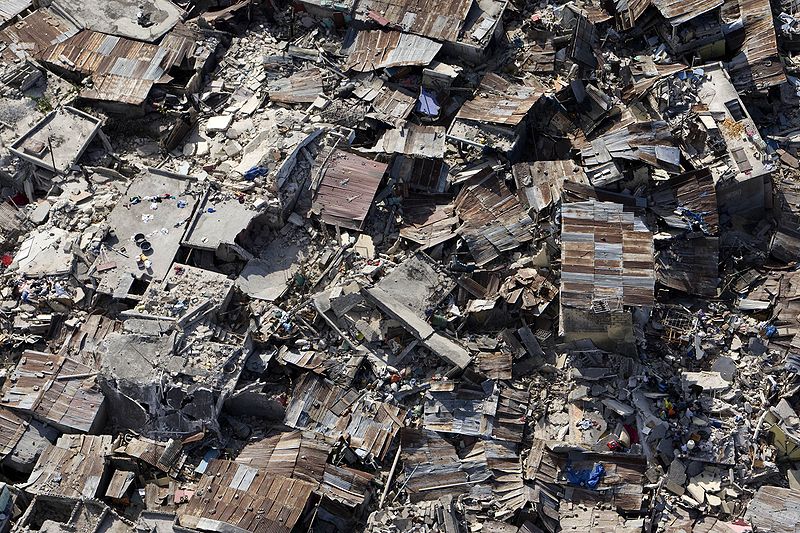
Today, we tend to hear of cholera mainly when it is associated with natural disasters where contaminated water can spread disease throughout a region where the infrastructure has been severely compromised. One of the most recent outbreaks occurred nearly a year after the Haiti earthquake—cholera left over 6,00 dead and caused nearly 350,000 cases. But, prior to the outbreak, Haiti had been cholera-free for half a century. So where did it come from?


Image available from Wikipedia commons

I mentioned earlier that cholera can result from an environmental strain of bacteria acquiring the phages encoding virulence factors. But, unfortunately, the Haiti outbreak was actually brought into the country by the people trying to help rebuild following the earthquake. By comparing the DNA sequence of the outbreak strain with strains known to infect other parts of the world, it was possible to narrow down the source of the outbreak to Nepal. And UN peacekeepers from Nepal were known to be based near the river responsible for the first cases. It is highly likely that it was one of these soldiers who brought the disease to Haiti and this case demonstrates how quickly cholera can spread if gets into the water system. Lessons learnt from this outbreak will hopefully lead to visitors from cholera-endemic countries being vaccinated before travelling to post-disaster areas, even if they are showing no sign of the disease. After all, something close to 3 in 100 patients remain asymptomatic after infection.

The biggest obstacle in the way of eradicating cholera today is poor sanitation leading to contamination of drinking water. In some parts of the world, the link between hygiene and disease prevention is not as obvious as it is to us in the Western world. Cholera isn’t a disease which requires complicated drugs or vaccines to prevent—washing hands with soap, avoiding contact with human waste, and clean drinking water would make all the difference. 

Friday, 17 February 2012

I went to a birthday gathering in a pub the other day to which someone had brought along the game Jenga. Putting aside any conclusions you may want to make as to just how exciting it must be to party with my friends and me, the game actually illustrates an interesting point about evolution. Sort of. 

The idea of Jenga is that you stack up these little sticks of wood and, taking turns, pull out the pieces one at a time in the hope that you won’t collapse the entire tower. If you’re very careful (and haven’t had more than one pint), it is possible to strip down the tower to the bare minimum of pieces that are required to keep it upright. But pick one of the essential load-bearing pieces and the whole thing comes crashing down on top of everyone’s drinks.

And, in a way, evolution is playing Jenga with our genes.

Jenga - image from Wikipedia Commons


You’d think that, after millions of years, our genomes would be stripped-down, streamlined collections of only the DNA we require to be us; nothing more, nothing less. This hypothesis is backed up by the fact that almost all the genes in eukaryotic genomes are conserved—this means that they are found across many species and have persisted in the population for far longer than you’d expect if they weren’t absolutely necessary for survival. The loss of non-essential genes can actually be seen in many parasitic species. The leprosy bacterium, for example, is a much reduced version of the microbe which causes tuberculosis. It has lost around half of its genes because it doesn’t need them anymore.

But here's the problem: scientists have known for ages that it is possible to delete many of the genes found in eukaryotic organisms with no noticeable effect. So a group at the University of Toronto decided to address the question of whether the C. elegans worm really needs all its genes, and their work was recently published in Cell.

C. elegans - Image is from Wikipedia Commons.
The method used by this group was especially clever because, instead of deleting single genes and looking at whether the worm survives, they tested the effect of gene loss over several generations and in competition with other worms. After all, this is what happens during evolution—survival of the fittest and all that. The basic method showcased in this paper used something known as RNA interference to knock-down the effects of a certain gene (RNA interference literally interferes with the synthesis of a protein by sequestering away the mRNA recipe before it can give the cell any instructions).

The scientists mixed those worms in which a gene had been knocked-down with the original worms. If the gene being tested proves to be vital, the knocked-down worms will be lost over successive generations due to competition with the original, fitter worms. And, fitting with the idea that we (and by ‘we’ I am referring to all eukaryotes including worms; some people are more worm-like than others, though) only have the genes we need to survive, nearly all the genes in C. elegans were found to impact fitness when knocked down.

This is not what was suggested from all the experiments in which it was found that single genes could be deleted without any obvious effect on the organism. The explanation is probably that different genes play a role under different conditions. This would mean that it might be possible for one gene to be deleted in the laboratory but, were the mutant to be let out into the big wide world, with all its various stresses and challenges, it would be seriously impaired in its survival.

Interestingly, many more genes are found to be essential when this method is used in C. elegans than are identified by similar experiments in yeast. The authors of this paper suggest that this is down to selective pressures being very different for single and multi-cellular organisms. Whereas something like yeast only has to deal with one environmental condition at one time, a multi-cellular organism is forced to juggle the needs of lots of different cell types which are all under different pressures of their own. A multi-cellular creature is far more complex than a unicellular organism and the genes required are therefore more finely tuned. A little like playing Jenga on not just a tower but an entire city and…OK, the analogy is collapsing all around me so I am going to give up and have a drink instead.